Researcher Spotlight – Sarah Grace Lott
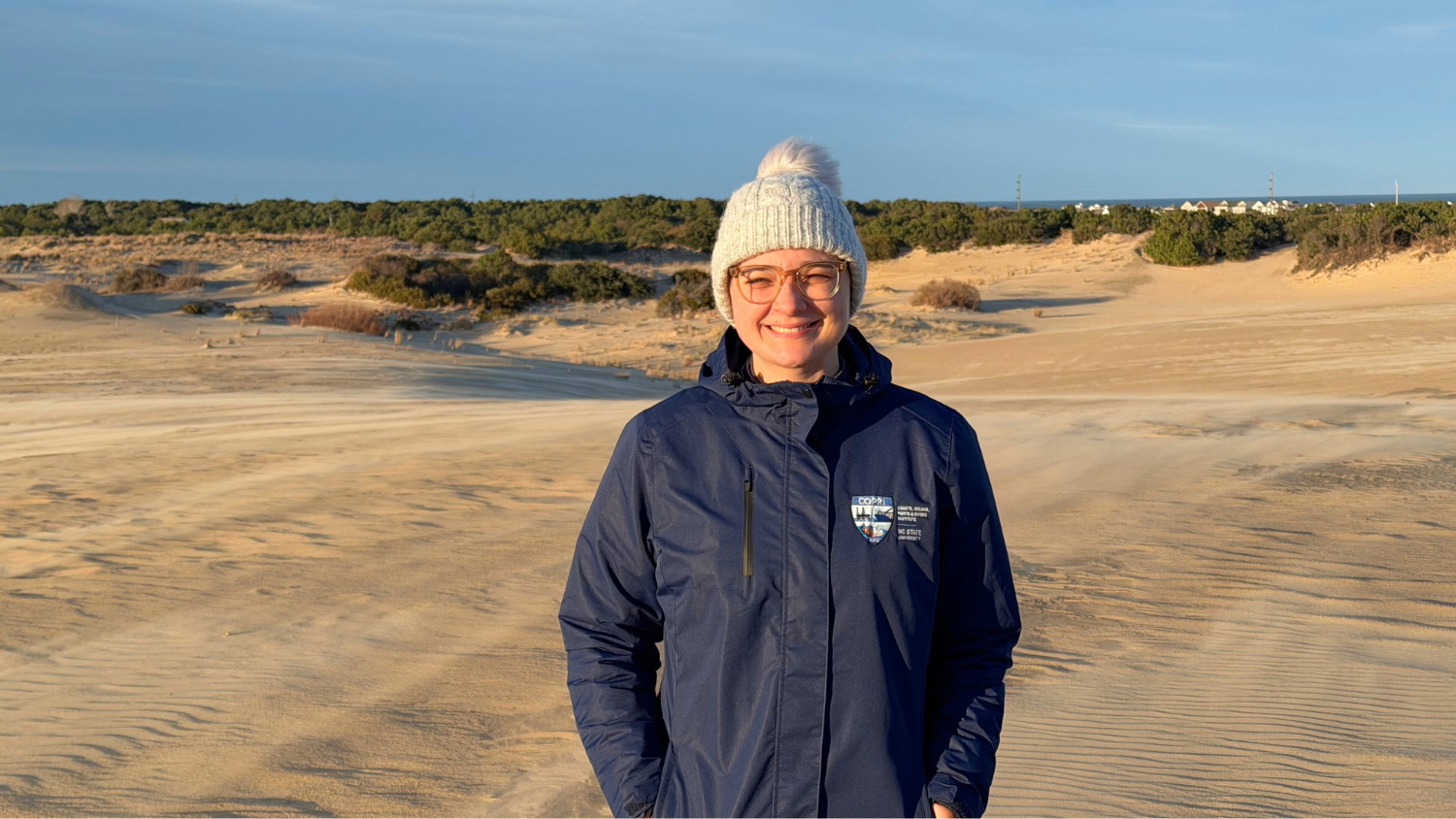
Sarah Grace Lott is a 2025-26 Global Change Research Fellow in the Department of Civil, Construction and Environmental Engineering. Read her interview below.
About You
What do you study?
I am a coastal engineer studying how communities can adapt to flooding from hurricanes. My research uses computer models to simulate storm surge flooding under different future scenarios. By working directly with community members, I model large-scale and complex adaptation strategies to help them envision a more resilient future with decreased flood risk.
Who influenced you to go into this field of study?
My path to coastal engineering began with undergraduate research on the geologic evolution of an island in Brazil. I got to characterize the physical changes in the shoreline, but I felt a disconnect because I never got to meet the people living there or understand how those changes impacted their lives. I realized that I want to focus not just on the physical processes, but on the people that are living through these changes, helping them understand why and how their community is changing now and think about the future change as well.
What do you think is the most pressing issue related to global change?
I think the most pressing issue of global change is the gap that exists between the communities at risk from change and the resources and research designed to help them. Scientists can develop sophisticated models, and agencies can allocate funds, but if that information and support isn’t shaped by community needs, its potential is lost.
About Your Research
What results are you finding?
Coastal communities on the North Carolina Outer Banks are engaged and want to plan for more resilient futures. By modeling adaptations, such as returning sections of the barrier islands to natural processes or raising the elevation of marshes, we have found that some of the preferred adaptations to reduce flooding actually led to more widespread flooding within communities. We have also found that adaptations have local effects on flooding. Looking to the future, communities will need to coordinate across the entire region to lead to widespread resiliency.
Who will benefit from your research?
This research directly benefits the community members of the North Carolina Outer Banks. Our work is grounded in community participation. All of our research questions and modeling scenarios are directly informed by the people who live in vulnerable communities. My goal is that by seeing the potential outcomes of different choices modeled out, these communities will have a powerful new tool to help them envision, discuss, and plan for a more resilient future.
How would you describe your research to a 3rd grader?
I use math to predict how communities at the beach will flood during storms. Sometimes, flooding can be higher than 6 feet and that leads to a lot of damage. Planning for the future using models can help communities develop ways to reduce the amount of flooding they experience during a storm.
About Your Global Change Research Fellow Experience
How do you expect the SE CASC Global Change Research Fellows Program to impact you and your work?
The fellows program has already provided me with great resources. At our field intensive, we learned about how communities in coastal North Carolina are planning for changes including marsh loss, erosion, and flooding. This has given me a more regional perspective on climate adaptation work outside of my direct study area. Additionally, the program has connected fellows with researchers specializing in climate models, science communication, and decision making. These experiences are pushing me to think more broadly about the context of my research and how to make it more useful and accessible.
What advice would you give to a student that is interested in getting involved in your field?
My biggest piece of advice is to remember that global change is an interdisciplinary field by nature, you don’t have to be a coastal engineer to study coastal flooding. My own path, from a geology background into engineering, shows that it’s possible. Take classes that genuinely interest you, even if they’re outside your major. Most importantly, seek out internships and research experiences. They are the best way to test your interests, build your skills, and hone your ideas about what you want to pursue.
What has been the most rewarding part or your favorite part of being a SE CASC Global Change Research Fellow?
The most rewarding part of being a fellow is the relationships I have built with the other fellows and the engagement that I have had with experts in their fields. The Global Change Research program encourages collaboration on meaningful research topics and I feel that I have been able to make real-world contributions during my time as a fellow.
Learn more about the Southeast Climate Adaptation Science Center’s Global Change Research Fellows program.
This story was originally published in Southeast Climate Adaption Center Science Center.