Design and Deliver ‘25: Changing Mindsets, Saving Lives
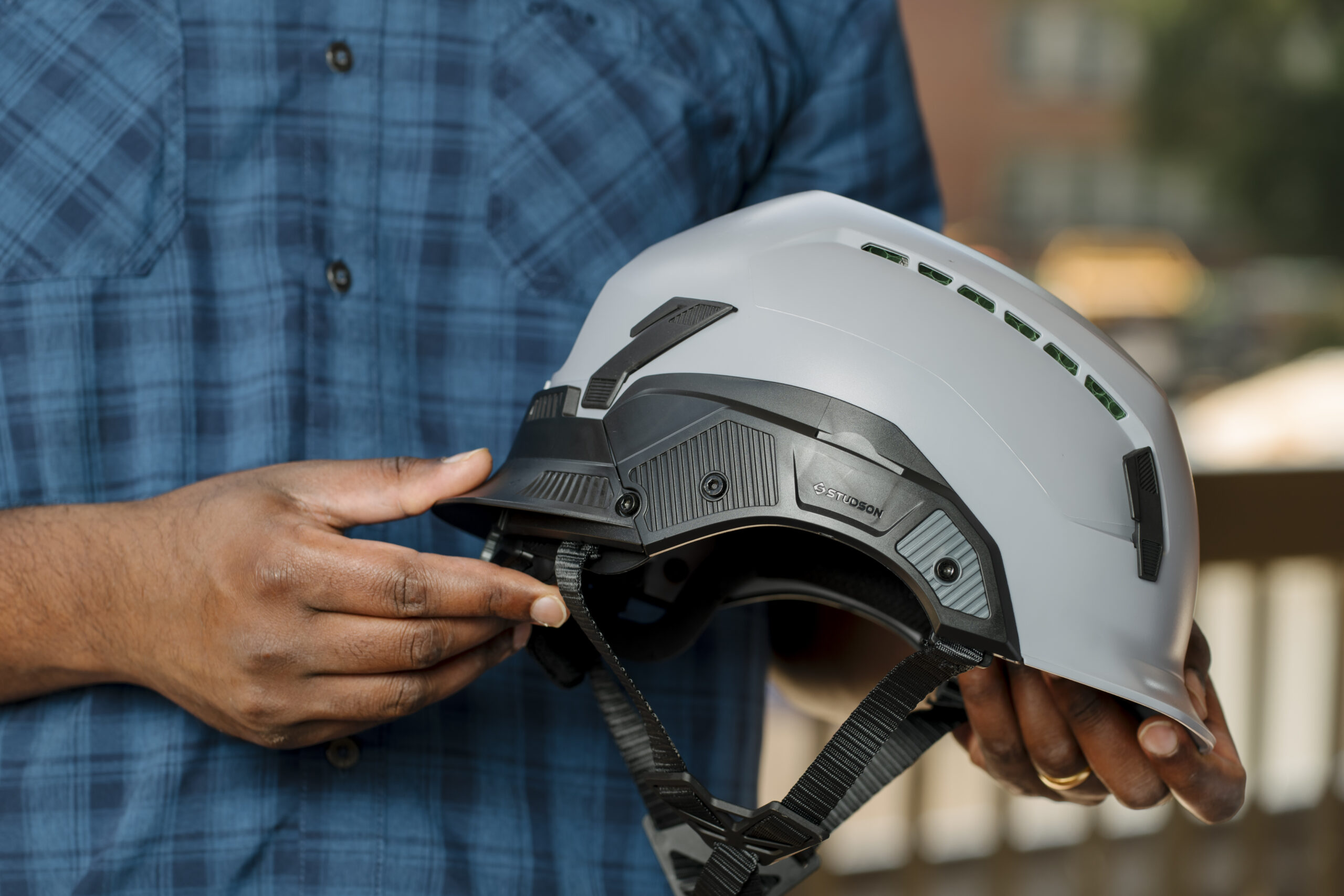
Every year in the United States, more than 200 construction workers die from traumatic brain injuries —a staggering toll that could be significantly reduced with a simple but crucial upgrade in protective gear. Leading this life-saving effort is Alex Albert, an associate professor in the Construction Engineering and Management Program. Backed by a grant from the Job-Site Safety Institute (JSI), Albert is conducting groundbreaking research to promote the widespread adoption of Type II safety helmets across the construction industry—particularly among smaller firms in the residential sector.

Traumatic brain injuries are responsible for roughly one in four construction fatalities. Despite these alarming numbers, most small construction fi rms still rely on traditional type I hard hats. This research aims to shift industry norms by promoting the widespread NC State University 24 adoption of Type II safety helmets—especially among small and mid-sized residential contractors who make up a large segment of the construction workforce but often lack access to the latest safety innovations.
Traditional Type I hard hats were designed only to protect against top-down impacts, offering little to no protection from the side—a critical limitation given the ways accidents commonly happen on real-world sites.
“Type I hard hats protect from impacts to the top of the head, while Type II safety helmets offer all-around protection—including sides, front and back—with added stability from chin straps and interior padding,” said Albert.
Albert’s study confronts not just the physical risks of working in construction, but the cultural and psychological barriers that prevent meaningful change. Why do small firms resist updating their safety gear—even when the benefits are clear? What kind of messaging resonates most effectively with these crews?
To answer these questions, Albert has employed a mixed-methods approach that blends behavioral science, survey data and in-depth interviews. The findings reveal a complex interplay of factors that shape safety decisions on residential job sites—including cost, tradition, risk perception, and misconceptions about comfort and practicality.
THE HIDDEN COST OF INACTION
One of the biggest barriers to adoption is financial. Type II safety helmets generally cost approximately $50 to $100 more per unit than their older counterparts. For small businesses managing tight margins, this can seem like a daunting investment. However, Albert’s research frames this price difference against the immense personal and financial toll of a serious injury. A single head injury can result in tens of thousands of dollars in medical expenses, lost wages and long-term disability—not to mention the emotional impact on the worker, their family and their colleagues.
“This study is an excellent example of JSI’s work—how we can effectively make job sites safer, provide better protection to workers, reduce injury severity, and ultimately save lives in construction,” said Erik Anderson, board chairman for the Job-Site Safety Institute. “Our next step is to share the research results with stakeholders, such as workers, business owners, vendors and suppliers, showing the value of moving from use of traditional hard hats to wearing safety helmets which will help to ensure every construction worker goes home safely to their family each day.
Type I hard hats protect from impacts to the top of the head, while Type II safety helmets offer all-around protection—including sides, front and back—with added stability from chin straps and interior padding.
– Alex Albert
To bridge this gap, the research team developed a series of informational interventions designed to highlight the value of prevention. One slide in the presentation asks a powerful question: If you knew there was a helmet that could significantly reduce your risk of a serious head injury, wouldn’t you want to wear it?
CHANGING THE NARRATIVE

The team’s approach avoids fear-based messaging, opting instead to emphasize empowerment, practicality and professionalism.
Rather than portraying workers as victims of circumstance, the campaign showcases them as decision-makers capable of elevating their craft and protecting their teams. Visual materials steer away from stereotypical images of grimy hard hats and rugged job sites. Instead, they present modern Type II helmets as sleek, high-performance tools—fitted with chin straps, lateral padding, improved ventilation, and adjustable sizing for all-day comfort.
“We’re not just asking workers to wear new PPE—we’re inviting them to lead change in the industry and help drive a shift in safety culture,” Albert noted. “It’s about equipping professionals with tools that reflect the complexity and risk of today’s job sites.”
The key, he said, lies in reaching workers and supervisors with messages that resonate with their lived experience—not just statistics. In one part of the study, participants were shown side-by-side comparisons of helmet performance during fall scenarios and struck-by incidents. The contrast was clear: Type II helmets stay on during impact, providing consistent protection from all angles. Type I models, lacking chin straps and side protection, often fail to perform in these same scenarios.
INSIGHTS FROM THE FIELD
Feedback from participants has been essential to refining the study’s messaging strategy. Workers across several small
residential firms shared their initial skepticism—and what ultimately changed their minds.
“I always thought a hard hat was just a hard hat. I didn’t know there was a difference. Seeing how much more protection the helmet gives really surprised me,” said one study participant, a residential construction worker who took part in the program.
According to Albert, the most effective interventions were those that invited self-reflection. Rather than relying solely on top-down mandates, the messaging encouraged site leaders to ask themselves: Would I be comfortable sending my own family member into this work environment with outdated equipment?
BUILDING A SAFER INDUSTRY FROM THE GROUND UP
The implications of this research extend far beyond helmets. By exploring the underlying psychology of safety culture in construction, Albert’s work helps chart a path toward broader improvements in job site conditions—particularly for small firms often left out of national policy conversations.
“Safety isn’t just about equipment— it’s about mindset,” said Albert. “Changing how people think about risk is the key to making every job site safer.”
As the Job Site Safety Project continues, the team hopes to scale its outreach materials and share evidence-based recommendations with contractors, safety managers and industry organizations across the country. The study is set to conclude later this year, with findings scheduled to be presented initially at the 2026 Construction Research Congress.